
Trace Former Bristol City Property Owners
Begin with the parcel's latest deed. From there, work backward through grantor and grantee names, transfer by transfer. Every link in the chain needs an instrument behind it. That means a real recorded deed with a matching land description. The table below is a research worksheet. It is not a sample chain for some named Bristol parcel. Fill each row only with dates and parties drawn from recorded deeds. That discipline keeps tax names and guesswork from creeping into the gaps.
| Transfer date | Grantor to grantee | Deed type | Book/page or instrument |
|---|---|---|---|
| Latest transfer found | Copy both parties from the deed | Use the instrument's stated type | Copy the Clerk's reference |
| Prior transfer | Search the latest grantor as earlier grantee | Verify from the next deed | Record the older reference |
| Earlier recorded transfer | Repeat with the prior grantor | Do not infer from a tax result | Preserve the exact citation |
| Historical record | Check the name used in that period | Compare the legal description | Note reel, book, or index range |
The worksheet keeps the backward chain whole. Gaps can come from an estate transfer, a spelling change, a replat, or an older book that must be inspected at the courthouse or tracked down on microfilm. Nothing in the table reflects an actual transfer. A row only means something once it is filled from a source.
Walk a Bristol Deed Chain Backward
A chain of title is deeds linked end to end. The grantor transfers an interest. The grantee receives it. A reverse search starts with the recent grantee. Then it traces that same party back to an earlier turn as grantee in the deed index. Rely on the legal description throughout. A modern street address may differ from the one written on a historic instrument.
- Identify the latest deed that matches the parcel and note its grantor, grantee, date, reference, and description.
- Search the grantee's name as a grantor in the preceding transfer, checking spelling and capacity.
- Open the earlier deed, confirm the same legal land, and record its parties and citation.
- Repeat backward until the needed time period or an unresolved break appears.
- When the online index stops, move to the Clerk's older books or the Library of Virginia microfilm guide.
- Grantor
- The person or entity conveying the stated interest.
- Grantee
- The person or entity receiving it.
- Reverse index
- A search made from the known recent owner back to the person who conveyed to them.
- Chain of title
- The ordered history of instruments affecting the same land.
- Quitclaim and warranty
- Different deed forms state different promises or interests; read the instrument rather than assuming its effect.
Bristol City Deed Index Coverage
Bristol's public OCRA information confirms a clerk-authorized subscription for remote imaging. What it never states is the earliest year of online indexing. Full image coverage is left open too. The Library of Virginia catalog, by contrast, lists historical reel coverage. That catalog anchors the archival path. It is not proof that OCRA starts in 1890 or that every year after 1956 is online. A no-match search is not the end. Try alternate spellings, initials, and entity names. Test Goodson and the exact legal description too. Then ask the Clerk whether the volume you need is indexed in OCRA or must be searched in person. A missing online result does not disprove the deed. The Bristol OCRA page lists the local subscription contact but publishes no coverage year, so treat the cutoff as an open search question rather than a fixed fact.
Bristol City Deed Index Years
The Library of Virginia holds microfilmed deed records for Bristol City reaching back to 1890. Its catalog lists general deed indexes covering 1890–1911, 1911–1933, and 1942–1956. It also lists the deed books that begin with those earliest volumes. That 1890 date marks the oldest historical reel in the collection. It is not an online cutoff.
Wills, a general council index, and city council minute books appear in the same catalog. Some reels circulate through interlibrary loan. Ask a local library or the state archive about the right reel. Staff there can explain how to reach it. When you find an entry, record the reel, volume, index period, and exact party spelling. An index entry only points toward the deed book.
The Library of Virginia Bristol City finding aid inventories these books and indexes. It stands as the archival starting point for owners of record. Use it to trace owners of record before modern parcel records begin.
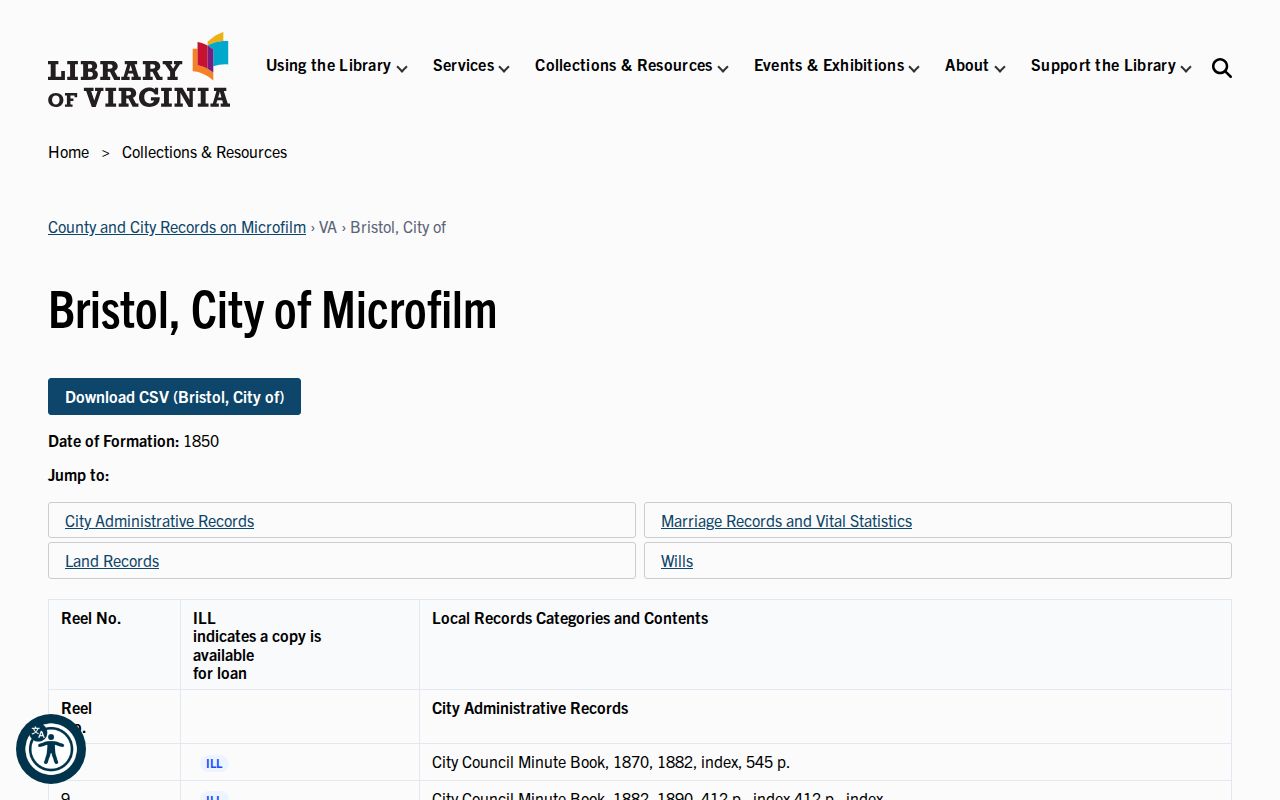
Pick the index period from the finding aid. Then follow its reference into the deed book, or ask an archivist to pull it.
Find Goodson in Bristol Deed Records
The city's own charter explains the name. Bristol began as Goodson in 1850. It became the Town of Goodson in 1856. The city took the Bristol name upon incorporation in 1890. A deed or index from the earliest period may say Goodson. A later parcel record says Bristol. Search both names in those old deed records.
A name match alone proves little about a specific parcel, though. The legal description matters most. Compare adjoining owners, street or stream references, and any cited plat before trusting the link. The charter tells you the jurisdiction's history; the recorded deed proves the transfer. Hold any uncertain match aside until the parcel relationship is clear.
The official Bristol charter and history records this incorporation sequence. The Goodson name remains a practical search key for early deed work.
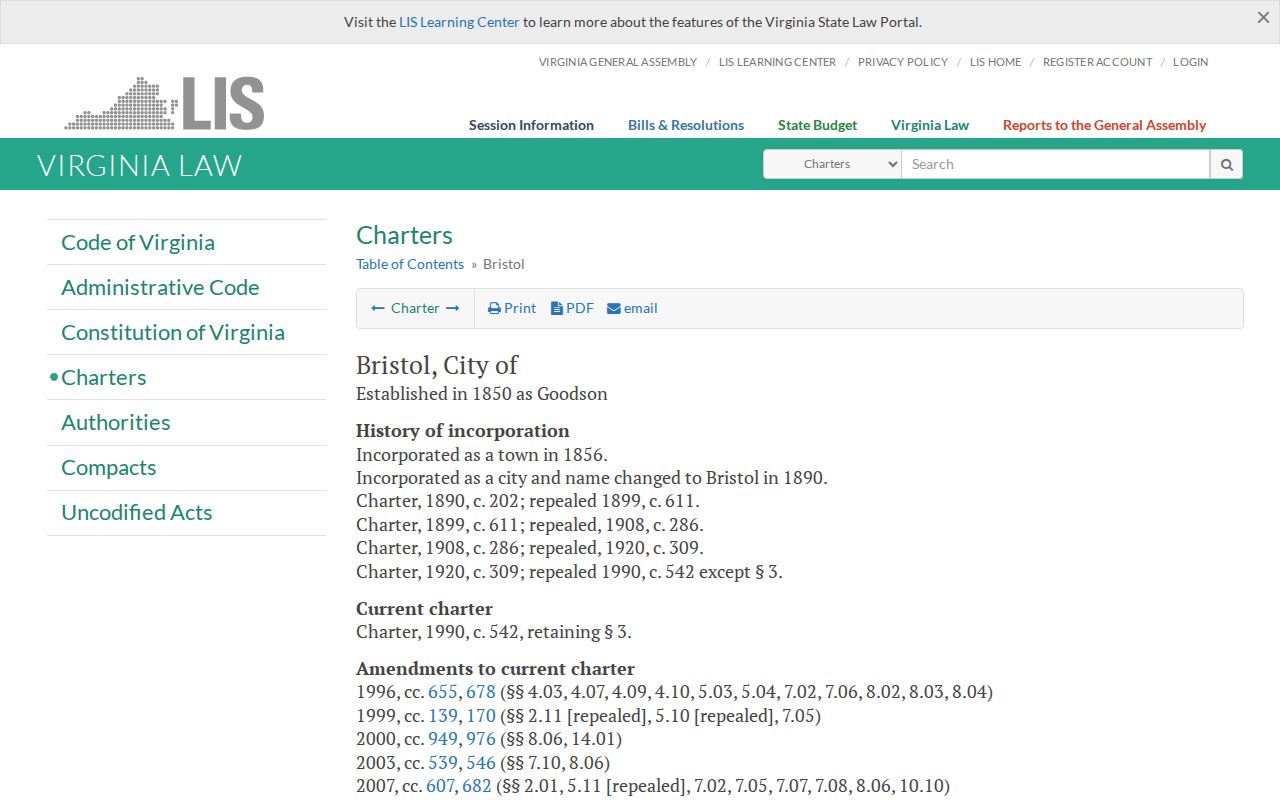
Search both place names in early records. Let instrument details decide whether the land is the same.
Bristol City Older Deed Descriptions
An old deed may point to a street that no longer exists under that name. Through its NG911 project, Bristol changed more than 7,600 location addresses and created more than 150 street segments, with the city-operation change set for April 30, 2021. So an earlier deed can carry a former street number or name. The GIS map helps here. Its Old Addresses, New Addresses, and Road Labels (New) layers let you link an old label to the current one. Addresses are only part of the puzzle. A parcel may have been split, combined, replatted, or crossed by a new street opening over the years. Older Bristol City property records may describe land by subdivision, lot and block, metes and bounds, book and page, or even adjacent landowners. Carry those references forward. Check the cited plat rather than treating the modern tax number as the only identifier. The current GIS and tax record are good locators. Still, a former-owner search works best when it preserves the old wording. If a deed was recorded under a different spelling or address, give the Clerk both variants along with the legal description.
Estate Transfers Can Break the Chain
A prior owner may have died before a later transfer took place. Bristol's Circuit Court Clerk handles probate of wills and estates, and the Library of Virginia catalog lists Bristol wills and will indexes. A probate file can explain an executor's or administrator's authority to sell. The land transfer itself may appear in a will admitted to probate, a fiduciary deed, a commissioner's deed, a distribution deed, or a later deed from heirs. An obituary is not a conveyance. Neither is a tax name or a family relationship. Tie each probate event to the recorded instrument and its legal description. When an owner of record changes name through marriage, entity succession, or fiduciary capacity, search the variants and keep the document citation with every link in the chain. The Clerk's land-record and probate roles are laid out on the official Circuit Court Clerk page. Confirm copy fees and request forms with the office before ordering.
Use Council Minutes as Context
The Library of Virginia catalog is the source. It lists Bristol City council minute books from 1870. General council indexes cover 1870–1912 and 1913–1934. Those volumes can explain a street opening. A municipal acquisition, a development decision, or an annexation may appear as well. Any of these could have shaped a parcel's history. They add context, not title. Council minutes cannot stand alone as proof of who owned a property in Bristol City. Pair a minute entry with the deed book, plat, or land instrument it references. An old council record may name a street. The place may have since changed labels. This is especially true after the 2021 address conversion. Keep both old and current terms in your search notes.
Where Former Owner Searches Stop
A backward chain can stall for many reasons. The break may come at an unindexed book, an estate transfer, a spelling change, a replat, or a shift in the land's legal description. OCRA publishes no stated start year for its online records. The Library of Virginia's catalog holds the earlier historical indexes, and the Clerk can help locate records beyond a public search screen. Write down what you searched and which period remains unchecked. For a single deed image or copy, follow the process on the Bristol City deed records page. The real task in a former-owner search is time depth: connect actual instruments, track place and address variants, and resist filling gaps with unrelated public information.
Lawful history research. Former owner research is for property history, title work, and due diligence. Do not use a historical chain to track, threaten, or harass a living person. Verify each claim with the custodian's record.